
18 August 2026
Why Is Your Hair Getting Drier, Frizzier & Curlier With Age? It Could Be Hair Ageing.
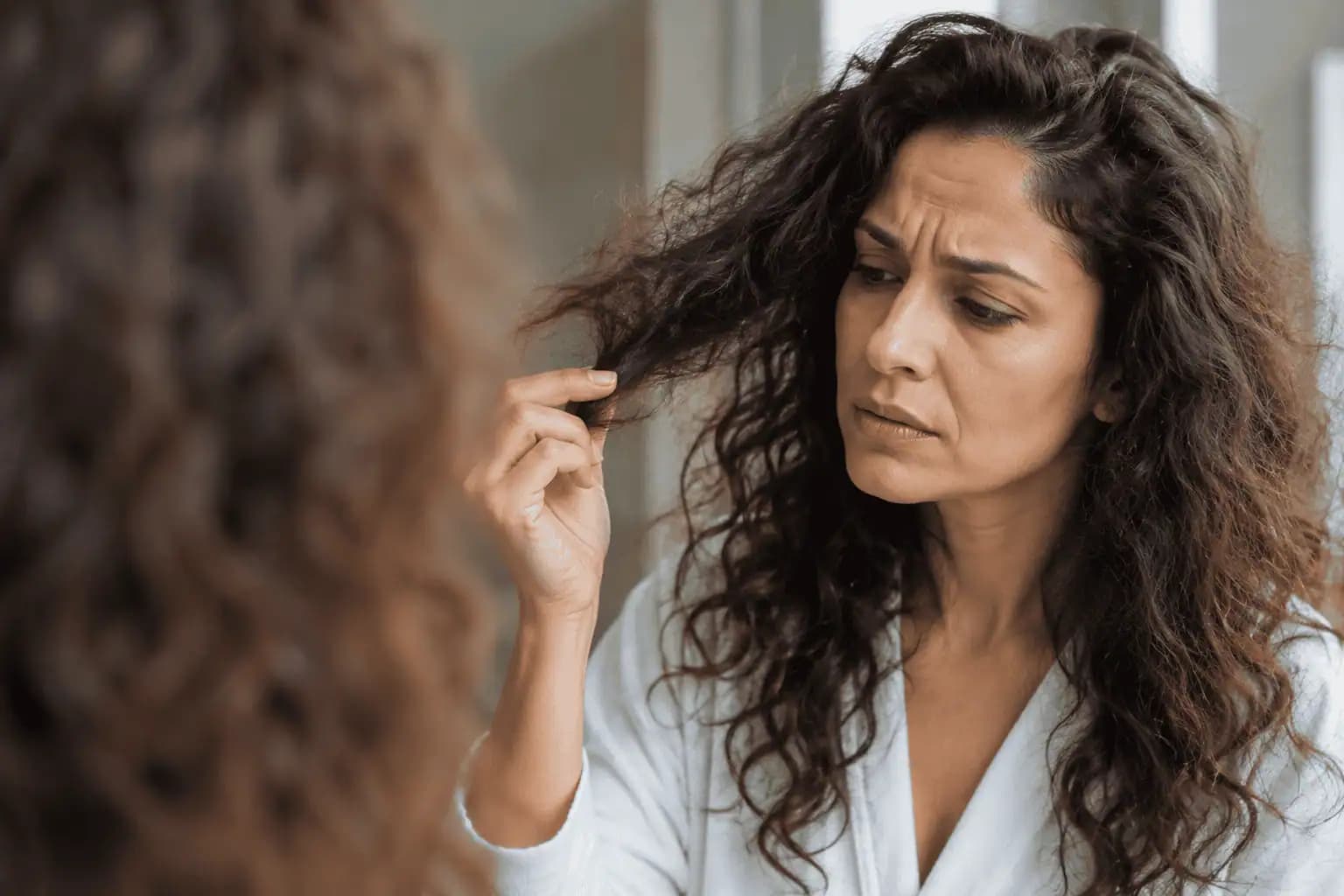
Have you noticed that your hair doesn’t behave the way it used to?
Perhaps it was once smooth and easy to manage, but over the years it has become drier, frizzier, rougher, or even curlier. You may also notice that your hair feels thinner or doesn’t grow as quickly as it once did.
This isn’t always because you’re using the wrong products. Your hair changes as you age too, and this is known as hair ageing.
What Happens to Your Hair as You Age?
Ageing affects both the hair follicle and the hair shaft, leading to several changes in the way your hair looks and feels.
1. Your Hair Can Become Drier
As we age, the scalp may produce less sebum (natural oil).
This means less oil reaches the hair shaft, particularly the lengths and ends, making hair feel:
- Dry
- Rough
- Less shiny
- More difficult to manage
This is one reason the hair products that worked perfectly in your 20s may not feel as effective later.
2. Your Hair Can Become More Frizzy
Hair that is drier and more porous is more likely to absorb moisture from the environment.
This can make the hair shaft swell unevenly, resulting in increased:
- Frizz
- Flyaways
- Roughness
- Unmanageability
Years of colouring, straightening, heat styling and sun exposure can add to this cumulative damage.
3. Your Hair Texture Can Change
One of the surprising effects of ageing is that your hair may no longer have the same texture it did when you were younger.
Hair can become:
- Straighter or curlier
- More coarse
- More wiry
- Less uniform in texture
Changes in the shape and function of the hair follicle can influence how individual strands grow, which can alter the natural pattern of the hair.
So if your previously straight hair has become slightly wavy or curly over the years, it isn’t necessarily your imagination.
4. Individual Hair Strands May Become Finer
With age, the diameter of individual hair fibres may decrease.
This can make hair feel thinner and contribute to a reduction in overall volume.
If you also have genetic hair loss, the thinning may become even more noticeable.
5. Hair May Grow More Slowly
Hair growth is controlled by a cycle consisting of growth, transition and resting phases.
With ageing, changes in this cycle can mean:
- A shorter growth phase
- Slower overall growth
- More time spent in the resting phase
This can make it seem like your hair has stopped growing beyond a certain length.
6. Grey Hair Is Also Part of Hair Ageing
As we age, the pigment-producing cells in the hair follicle gradually become less active.
As melanin production decreases, hair becomes grey and eventually white.
The age at which this happens is largely influenced by genetics, although certain medical and nutritional factors can contribute to premature greying.
Why Does Older Hair Break More Easily?
The hair shaft is exposed to years of:
- Sun exposure
- Heat styling
- Hair colouring
- Chemical treatments
- Brushing and friction
Over time, this cumulative damage can weaken the outer protective layer of the hair.
As a result, older hair may be more prone to split ends and breakage.
This is different from hair falling from the root.
Can You Prevent Hair Ageing?
You cannot stop biological ageing, but you can reduce premature hair damage.
Protect your hair by:
Eating a balanced diet with adequate protein and essential nutrients
Treating nutritional deficiencies when present
Limiting excessive heat styling
Avoiding unnecessary chemical treatments
Using conditioner regularly, especially on the lengths
Being gentle while brushing and detangling
Protecting your hair from excessive sun exposure
Treating dandruff and other scalp conditions promptly
Remember, oils, masks and conditioners can improve the quality and appearance of the hair shaft, but they cannot reverse changes occurring inside the hair follicle.
Is All Hair Thinning Just Part of Ageing?
No.
While some changes are a normal part of getting older, significant hair thinning should not simply be dismissed as ageing.
If you notice:
- A widening hair part
- Receding hairline
- Noticeably reduced hair density
- Excessive shedding
- Patchy hair loss
it’s worth consulting a dermatologist.
Conditions such as androgenetic alopecia, nutritional deficiencies, thyroid disorders and other causes of hair loss can occur at any age and may require treatment.
The Bottom Line
Your hair ages just like your skin does.
With time, it can become drier, frizzier, finer, more brittle and sometimes even change texture. Some of these changes are a natural part of ageing, while others are accelerated by years of heat, chemicals, UV exposure and hair damage.
So the next time you wonder why your hair doesn’t behave the way it used to, remember, it may not be your shampoo. Your hair could simply be ageing too.
Leave a comment
Share your thoughts
Your email address will not be published. Required fields are marked.