
08 July 2026
Is Your Hair Falling More During the Monsoon? Here's Why
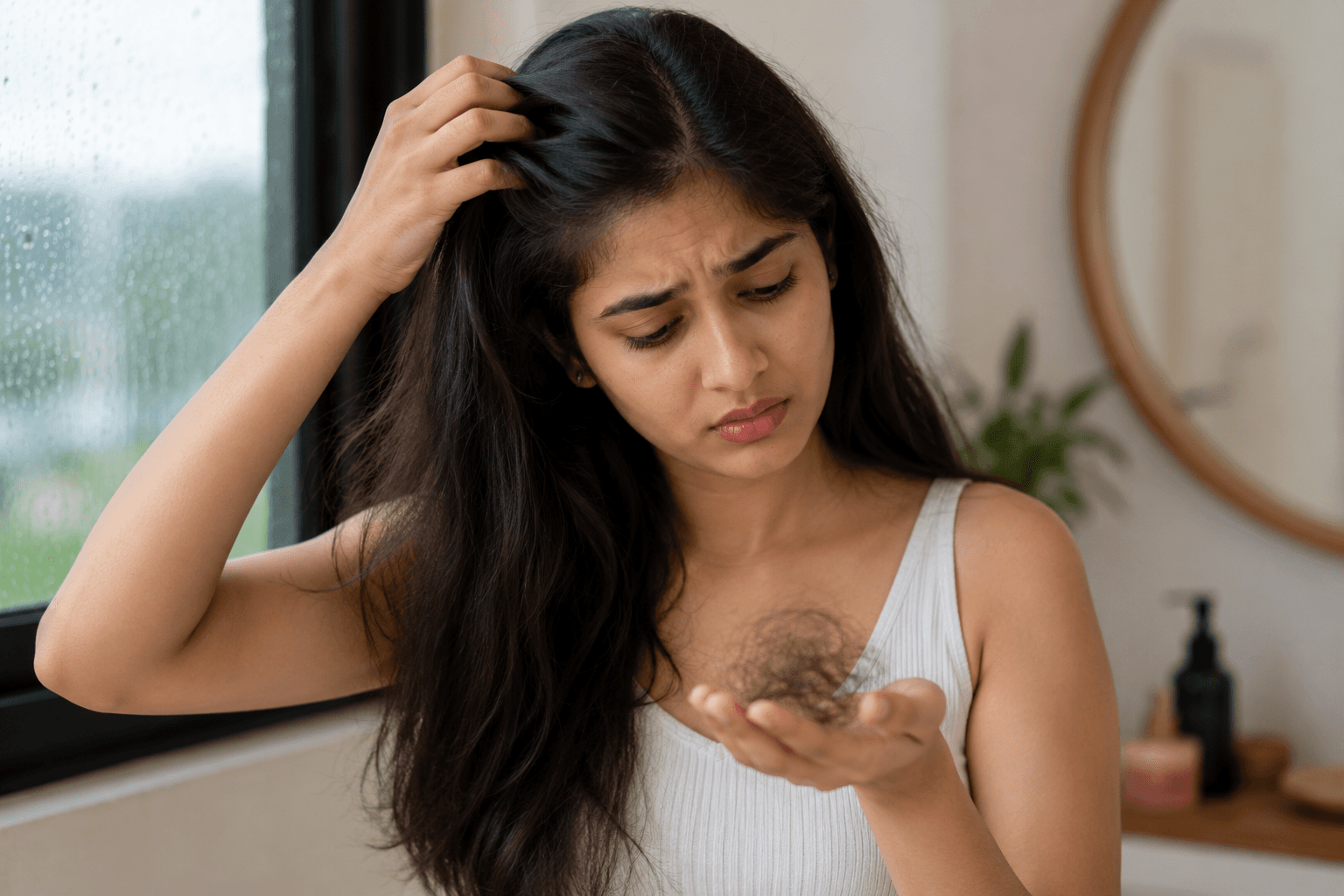
Many people notice increased hair shedding during the rainy season and wonder if the weather is to blame.
The answer is yes. Hair fall may appear to increase during the monsoon, but it’s usually due to a combination of environmental factors and changes in hair care habits rather than the rain itself.
Let’s understand why.
Does the Monsoon Really Cause Hair Fall?
Seasonal hair shedding is common, and many people experience a slight increase in hair fall during the monsoon. While the exact reason isn’t fully understood, factors like humidity, scalp health, and seasonal changes can all contribute.
If you’re already dealing with conditions like androgenetic alopecia, nutritional deficiencies, or recent illness, you may notice the shedding even more.
Why Hair Fall May Increase During the Monsoon
1. Increased Humidity
High humidity can make the scalp sweat more and feel oily.
This can lead to:
- Dirt and sweat build-up
- Increased dandruff
- Itching and scalp irritation
An unhealthy scalp can contribute to increased hair shedding.
2. Fungal & Dandruff-Related Scalp Problems
Warm, humid conditions create an environment where dandruff and fungal infections may flare up.
Symptoms may include:
- Flaking
- Itching
- Redness
- Increased hair fall due to scalp inflammation
3. Wet Hair for Long Periods
Keeping your hair tied up or covered while it’s still wet can increase scalp irritation and create an environment that favours fungal growth.
Always dry your hair before tying it or going to bed.
4. Hair Becomes More Fragile
Humidity causes the hair shaft to absorb moisture, making it swell. This can increase frizz and make the hair more prone to breakage while combing or styling.
Remember, hair breakage and hair fall are not the same thing, but both can make your hair appear thinner.
How to Reduce Hair Fall During the Monsoon
Keep your scalp clean by washing it regularly with a mild shampoo.
If you have dandruff or an itchy scalp, seek treatment early instead of waiting for it to worsen.
Dry your hair completely before tying it or sleeping.
Avoid sharing towels, combs, or hair accessories.
Eat a balanced diet rich in protein, iron, and vitamins to support healthy hair growth.
When Should You See a Dermatologist?
Consult a dermatologist if:
- Hair fall is excessive or lasts more than 6–8 weeks
- You notice widening of your parting or visible thinning
- Hair fall is accompanied by severe itching, dandruff, or scalp redness
- You develop patchy hair loss
Early treatment often gives the best results.
Final Takeaway
A slight increase in hair fall during the monsoon is common, but it shouldn’t be ignored if it’s excessive or persistent.
Maintaining a healthy scalp, following good hair care habits, and addressing underlying scalp conditions can go a long way in keeping your hair healthy throughout the rainy season.
Healthy hair starts with a healthy scalp, even during the monsoon.
Leave a comment
Share your thoughts
Your email address will not be published. Required fields are marked.