
16 September 2026
Think Sleep Only Affects Your Energy? Think Again.
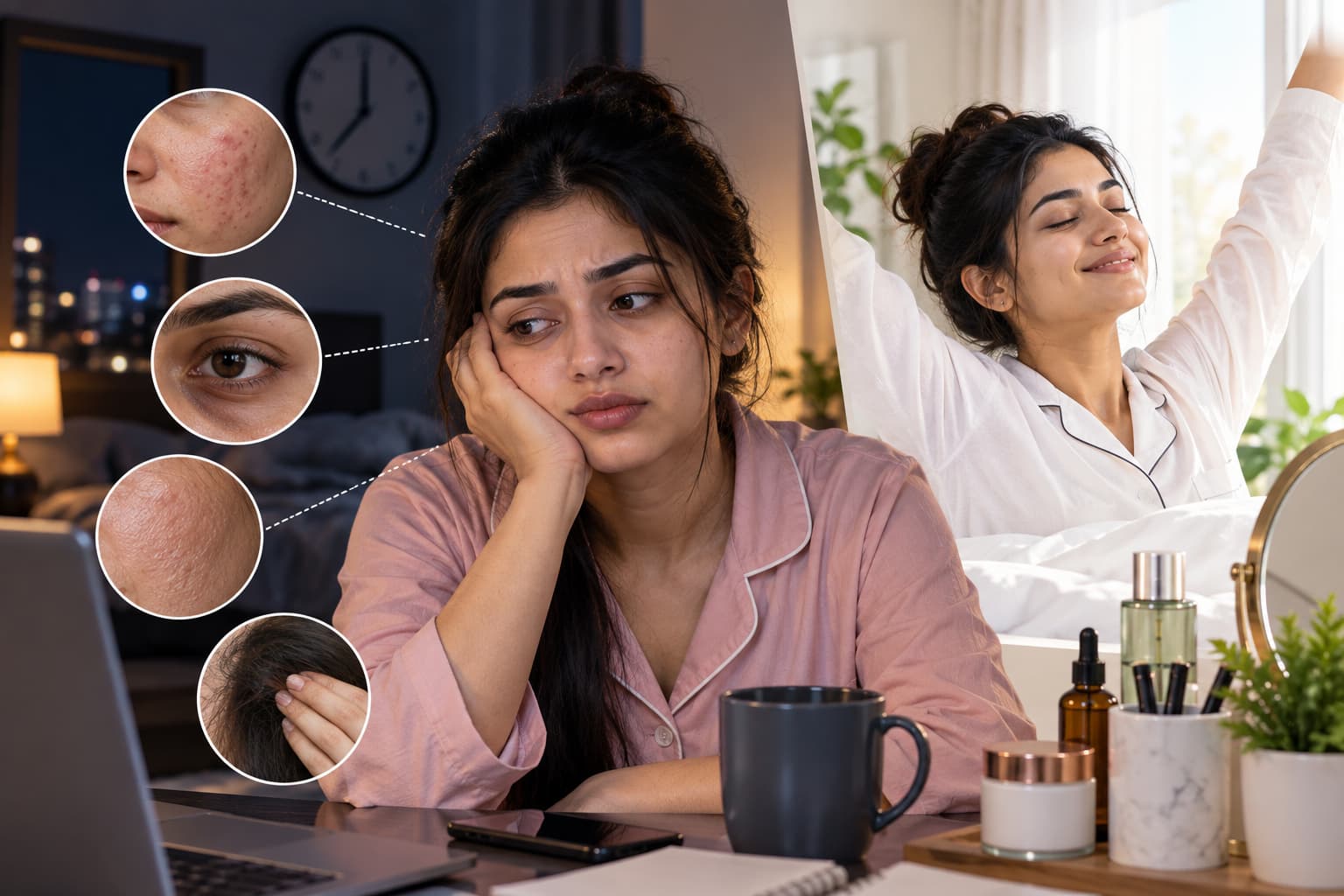
We often think of sleep as something that affects our energy, mood and concentration. But your skin and hair are also closely connected to your sleep cycle.
Late nights and poor quality sleep don’t just leave you looking tired the next morning over time, they can affect acne, hair health, skin ageing and your overall skin barrier.
Your Body Has an Internal Clock
Your body follows a natural circadian rhythm a roughly 24-hour internal clock that helps regulate sleep, hormones, metabolism, body temperature and many other processes.
This rhythm works best when your sleep and wake times are reasonably consistent.
When you regularly stay up very late, sleep at irregular times or don’t get enough sleep, this rhythm can become disrupted.
And your skin has its own circadian rhythm too.
So, What Happens to Your Skin?
1. Poor Sleep Can Increase Stress Hormones
Sleep deprivation and an irregular sleep schedule can affect the body’s stress response, including cortisol.
Chronically elevated or poorly timed cortisol can contribute to inflammation and may influence oil production and the skin’s ability to maintain its normal barrier function.
For someone already prone to acne, this can potentially contribute to more frequent or persistent breakouts.
2. Your Skin Needs Night-Time Repair
While you sleep, your body carries out important repair and recovery processes.
Your skin barrier also undergoes changes at night, including increased water loss and processes involved in repair and regeneration.
Consistently cutting your sleep short means you’re repeatedly reducing the time available for these restorative processes.
The result? Dullness, dryness, increased sensitivity and a tired-looking complexion.
3. It Can Affect Skin Ageing
Sleep is an important part of the body’s repair processes.
Long-term poor sleep has been associated with signs of intrinsic skin ageing and reduced skin recovery. Chronic stress and inflammation can also contribute to processes involved in collagen breakdown.
This doesn’t mean one late night will suddenly cause wrinkles.
But years of consistently poor sleep can become one more factor contributing to premature looking skin.
4. What About Hair Fall?
Your hair is not immune to what is happening in the rest of your body.
Poor sleep and chronic stress can affect the normal hair-growth cycle. Significant physical or psychological stress can contribute to telogen effluvium, a type of temporary hair shedding that often becomes noticeable weeks to months after a trigger.
Sleep problems aren’t the only cause of hair fall, though. Nutritional deficiencies, thyroid problems, hormonal changes, illness and other conditions can also be responsible.
So persistent or significant hair fall shouldn’t simply be blamed on poor sleep.
And It's Not Just About How Many Hours You Sleep
Timing matters too.
Sleeping for eight hours but regularly going to bed at very different times can still disrupt your circadian rhythm.
Your body responds to cues such as light exposure, meal timing, activity and your sleep-wake schedule to keep this internal clock synchronised.
That’s why a consistent sleep routine can be helpful.
How to Give Your Skin & Hair a Better Night
Aim for adequate sleep every night
Try to maintain a fairly consistent sleep and wake time
Get natural light exposure during the day
Reduce bright light and excessive screen exposure close to bedtime
Avoid making very late nights a regular habit
Don’t rely on skincare or hair supplements to compensate for chronically poor sleep
The Bottom Line
Sleep isn’t just rest for your brain it’s recovery time for your entire body, including your skin and hair.
One late night won’t age your skin or cause your hair to fall out.
But if late nights, irregular sleep and chronic sleep deprivation have become your routine, your skin and hair may eventually show it.
Leave a comment
Share your thoughts
Your email address will not be published. Required fields are marked.