
11 June 2026
Why You’re Still Tanning Despite Using Sunscreen
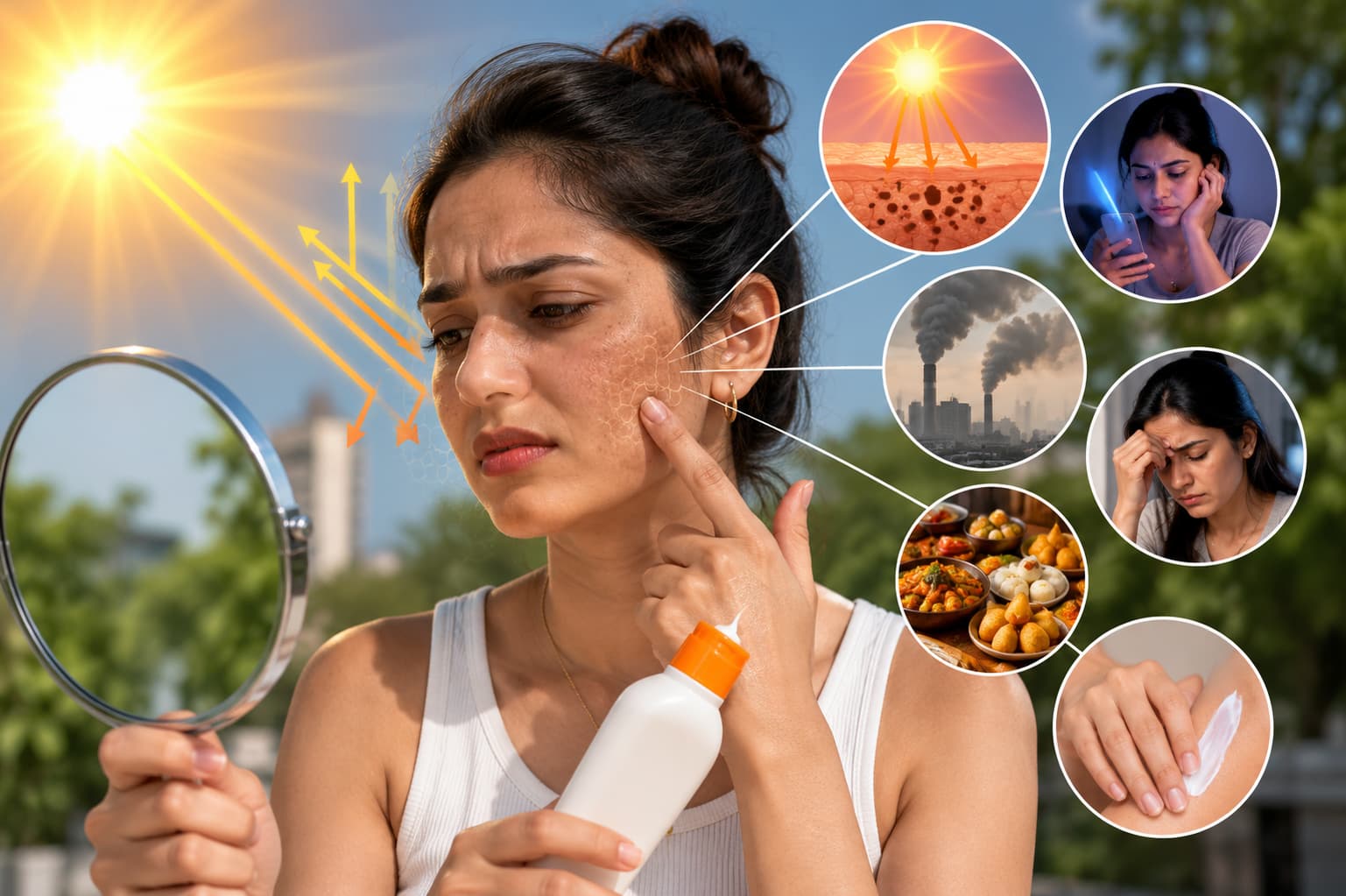
Almost everyone has experienced this.
You apply sunscreen regularly, avoid direct sun exposure whenever possible, and yet your skin still appears darker after a vacation, outdoor event, or even your daily commute.
So, is your sunscreen not working?
Not necessarily.
First, Sunscreen Doesn't Block 100% of UV Rays
This is one of the biggest misconceptions about sunscreen.
Even a high-protection sunscreen does not provide complete protection from UV radiation.
For example:
- SPF 30 blocks approximately 97% of UVB rays
- SPF 50 blocks approximately 98% of UVB rays
That remaining exposure can still stimulate melanin production, especially if you’re spending extended periods outdoors.
This is why some tanning can still occur despite sunscreen use.
You May Not Be Applying Enough
Most people apply only 25-50% of the amount required to achieve the SPF mentioned on the label.
For the face and neck, a useful guide is:
- Approximately two finger lengths of sunscreen
Applying too little significantly reduces the protection you receive.
You're Not Reapplying
Sunscreen isn’t a one-time application.
It can be removed by:
- Sweat
- Touching your face
- Oil production
- Friction from masks or clothing
If you’re outdoors, reapplication every 2–3 hours is important.
Sun Exposure Adds Up
Many people think only beach vacations or outdoor sports cause tanning.
In reality, cumulative exposure from:
- Daily commuting
- Walking to lunch
- Driving
- Outdoor errands
can gradually lead to tanning over time.
Physical Protection Is Often Missing
This is where many people make a mistake.
Sunscreen should be viewed as one layer of protection, not the only layer.
If you’re spending significant time outdoors, also use:
- Caps or hats
- Sunglasses
- Umbrellas
- Full-sleeved clothing
- Face masks or scarves when appropriate
Physical barriers often provide protection that sunscreen alone cannot.
Heat and Visible Light Matter Too
For some people, especially those prone to pigmentation, not only UV rays but also visible light and heat exposure can worsen tanning and pigmentation.
This is one reason why outdoor exposure during peak afternoon hours often causes more skin darkening.
How to Minimise Tanning
Apply enough sunscreen
Reapply when outdoors
Use SPF 30-50 consistently
Wear physical protection during prolonged exposure
Avoid peak sun hours when possible
Maintain a healthy skin barrier
Final Takeaway
If you’re tanning despite using sunscreen, it doesn’t automatically mean your sunscreen has failed.
The reality is that sunscreen provides excellent, but not complete protection. Tanning can still occur, especially with prolonged sun exposure.
The best approach is to combine sunscreen with physical protection. Think of sunscreen as your first line of defence, not your only one.
Leave a comment
Share your thoughts
Your email address will not be published. Required fields are marked.